
What Annex A is, and what it isn't
Annex A is a normative part of ISO/IEC 27001, but it works differently from the clauses. Clauses 4 to 10 are requirements you meet in full. Annex A is a reference list of controls you compare against. Clause 6.1.3 asks you to work out which controls your risk treatment needs, then check that list against Annex A so nothing necessary has been overlooked. You may add controls that Annex A doesn't name, and you may exclude ones that genuinely don't apply, provided you justify the decision.
Annex A states each control in a sentence or two. The implementation guidance for every control sits in ISO/IEC 27002; see ISO 27001 vs ISO 27002 for how the two fit together and how ISO 27002's attributes let you sort the controls by type, property and capability.
The four themes
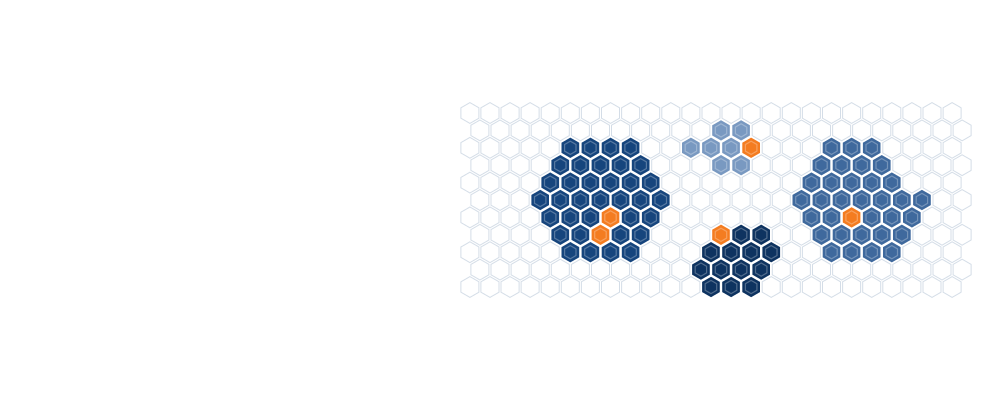
- OrganisationalControls 5.1–5.37 37
- PeopleControls 6.1–6.8 8
- PhysicalControls 7.1–7.14 14
- TechnologicalControls 8.1–8.34 34
| Theme | Controls | Examples |
|---|---|---|
| 5 Organisational | 37 | Policies, roles, asset inventory, access control, supplier security, cloud services, incident management, business continuity, legal requirements |
| 6 People | 8 | Screening, employment terms, security awareness and training, disciplinary process, remote working, reporting security events |
| 7 Physical | 14 | Secure areas, entry controls, clear desk and screen, equipment security, storage media, secure disposal |
| 8 Technological | 34 | Endpoint devices, privileged access, authentication, malware protection, vulnerability management, backups, logging, network security, secure development |
Theme by theme: what the controls cover in practice
Organisational controls (5.1 to 5.37)
The largest theme, and the one that most often decides an audit. It covers how security is governed and run across the business rather than in any one system.
| Group | Controls | What it means for an SME |
|---|---|---|
| Governance | 5.1–5.8 | Approved policies, defined roles, segregation of duties, contact with authorities and special interest groups, threat intelligence, and security built into projects |
| Information and assets | 5.9–5.14 | An inventory with owners, acceptable use, return of assets at exit, classification, labelling and rules for transferring information |
| Identity and access | 5.15–5.18 | Who can access what, how identities and passwords are managed, and how access is granted, reviewed and removed |
| Suppliers and cloud | 5.19–5.23 | Assessing suppliers, security terms in contracts, the ICT supply chain, monitoring supplier performance and managing your use of cloud services |
| Incidents | 5.24–5.28 | Planning, assessing events, responding, learning from incidents and preserving evidence |
| Continuity | 5.29–5.30 | Keeping security in place during disruption and making sure ICT can recover in time |
| Compliance | 5.31–5.37 | Legal and contractual requirements, intellectual property, records, privacy, independent review, checking policies are followed and documented operating procedures |
People controls (6.1 to 6.8)
These follow a person through their time with you: background screening before they start, security responsibilities in employment terms, awareness and training, a disciplinary process, responsibilities that continue after they leave, confidentiality agreements, remote working rules and a way to report security events. Auditors usually test them by sampling recent starters and leavers and by asking staff how they would report a suspicious email.
Physical controls (7.1 to 7.14)
Perimeters, entry controls, securing offices, physical monitoring, environmental threats, working in secure areas, clear desk and screen, equipment siting and maintenance, assets off-premises, storage media, utilities, cabling and secure disposal. For a cloud-first business, your hosting provider runs the data centre controls, so your own focus is usually offices, laptops taken home and disposal of devices and media.
Technological controls (8.1 to 8.34)
| Group | Controls | What it means for an SME |
|---|---|---|
| Endpoints and access | 8.1–8.5 | Managed devices, privileged access, restricting access to information and source code, and secure authentication such as MFA |
| Operations | 8.6–8.14 | Capacity, malware protection, vulnerability management, configuration, deletion, masking, data leakage prevention, backups and redundancy |
| Logging and monitoring | 8.15–8.17 | Logs, monitoring for anomalous behaviour and synchronised clocks |
| System and network | 8.18–8.24 | Privileged utilities, software installation, network security and segregation, web filtering and cryptography |
| Development and change | 8.25–8.34 | Secure development lifecycle, security requirements, architecture, secure coding, testing, outsourced development, separate environments, change management, test data and protecting systems during audits |
For a SaaS business, the development and cloud controls carry the most weight; our guide to ISO 27001 for SaaS covers them in detail.
What changed in the 2022 edition
The 2022 edition merged and reorganised the old 114 controls into 93, and added 11 new ones that reflect how organisations work now:
- 5.7 Threat intelligence
- 5.23 Information security for use of cloud services
- 5.30 ICT readiness for business continuity
- 7.4 Physical security monitoring
- 8.9 Configuration management
- 8.10 Information deletion
- 8.11 Data masking
- 8.12 Data leakage prevention
- 8.16 Monitoring activities
- 8.23 Web filtering
- 8.28 Secure coding
The transition period ended on 31 October 2025, so every valid certificate is now to the 2022 edition.
How to decide which controls apply
- Run your risk assessment. Each risk you treat points to the controls that reduce it.
- Add your obligations. Contracts, the Privacy Act and customer requirements can require a control regardless of risk.
- Record the decision. Your Statement of Applicability lists every control, whether it's included, why, and whether it's implemented.
Exclusions are fine when they're genuine. A fully remote company with no office may exclude some physical controls, and a business that writes no software may exclude secure development. “We haven't done it yet” is not a valid reason to exclude a control.
Typical exclusion decisions
| Situation | Controls often excluded | Watch out for |
|---|---|---|
| Fully remote, no offices in scope | Some of 7.1–7.6 and 7.11–7.12 | Clear desk and screen, off-premises equipment and secure disposal (7.7, 7.9, 7.14) still apply to home workers |
| No in-house software development | Most of 8.25–8.29 and 8.31 | If you outsource development, 8.30 applies, and change management (8.32) still applies to configuration changes |
| All infrastructure in the cloud | Very few, if any | The provider runs some controls for you, but you still meet them through supplier and cloud controls (5.19–5.23) |
| No personal information beyond staff records | Rarely 5.34 | Staff and contractor data is still personal information; this control almost always applies |
Australian obligations that point to controls
Some controls are effectively decided for you by law or contract, whatever your risk scores say:
- Privacy Act 1988 and APP 11. Taking reasonable steps to protect personal information leads straight to 5.34 (privacy and protection of PII) and supports access, encryption and deletion controls.
- Notifiable Data Breaches scheme. You must assess a suspected eligible breach within 30 days and notify the OAIC and affected people when it's likely to cause serious harm. Your incident controls (5.24 to 5.28) need to cover that.
- Ransomware payment reporting. Businesses above the Cyber Security Act 2024 turnover threshold must report a payment to the ASD within 72 hours, which belongs in your incident response plan. See Australia's new cyber and privacy laws.
- Government and enterprise contracts. Many require the Essential Eight alongside ISO 27001. Its strategies line up with technological controls such as 8.2, 8.5, 8.7, 8.8, 8.9, 8.13 and 8.19; see Essential Eight vs ISO 27001.
Record these in your legal and contractual requirements register under 5.31, and cite them as the justification in your SoA.
What auditors check
For each included control, the certification auditor looks at three things:
- Design. Is there a defined way of doing it that fits your risk? A policy, standard or configuration that says what happens.
- Operation. Does it actually happen? The auditor samples: three recent leavers to see access was removed on time, a handful of changes to see they were approved, a recent backup restore test.
- Evidence over time. Periodic controls such as access reviews, supplier reviews and vulnerability scans need records from more than one cycle where possible, not a burst of activity the week before the audit.
Auditors also check consistency. If the SoA says a control is implemented, the policy, the evidence and the staff interviews should agree. See Stage 1 and Stage 2 audits explained for how the sampling works.
Common mistakes
- Treating Annex A as a 93-item checklist. Implementing everything regardless of risk produces an expensive ISMS that still lacks the risk link auditors look for.
- Excluding what a supplier runs. Your cloud provider operating the data centre doesn't make supplier or cloud controls inapplicable; it makes them more important.
- One policy per control. Ninety-three documents nobody reads. One well-written policy can support many controls; see ISO 27001 required documents.
- Ignoring the new controls. Threat intelligence, configuration management and monitoring activities are often the least mature at a first gap analysis.
- Working from 2013 mappings. Old templates still number controls the 2013 way. Rebuild on the 2022 structure.
Annex A is not the whole standard
Auditors spend as much time on clauses 4 to 10 (context, leadership, planning, support, operation, performance evaluation and improvement) as on the controls. A strong control set without a working management system around it won't pass; see ISO 27001 clauses 4 to 10 explained, and for the order in which it all comes together, how to implement ISO 27001. Our ISO 27001 implementation builds both together, and the same controls map across to SOC 2 and the Essential Eight.
To see which controls you already meet and which will take longest to close, book a free 30-minute consultation.