
What a gap analysis is, and what it isn’t
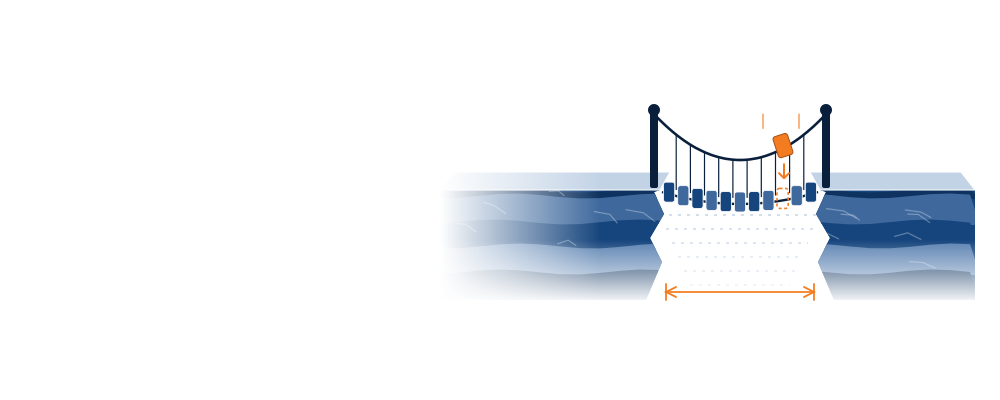
A gap analysis (also called a gap assessment) measures the difference between your current state and what ISO 27001 requires, then tells you what to do about it. It is advisory and forward-looking. Its job is to make the rest of the project predictable: how much needs building, how much is already there and what will take longest.
It is often confused with three other activities that happen in an ISO 27001 project. Each has a different purpose.
| Gap analysis | Risk assessment | Internal audit | Stage 1 audit | |
|---|---|---|---|---|
| Required by the standard? | No | Yes, clauses 6.1.2 and 8.2 | Yes, clause 9.2 | Yes, part of certification |
| Question it answers | How far are we from the standard? | What could go wrong with our information, and how bad would it be? | Does our operating ISMS meet our own rules and the standard? | Is the ISMS ready for the certification audit? |
| When | At the start | After scope is set, then at planned intervals | Before Stage 2, then every year | After the ISMS has run through a cycle |
| Who runs it | Anyone competent, including your implementer | You, with risk owners | Impartial auditors who don’t audit their own work | An accredited certification body |
| Gives advice on fixes? | Yes, that’s the point | Leads to treatment decisions | Reports findings; fixes are yours | No, it can’t |
A gap analysis will almost always find that your risk assessment is missing or doesn’t yet meet clause 6.1.2. That is a finding, not a substitute. Our risk assessment guide covers what the real thing involves, and Stage 1 and Stage 2 explains what the certification body checks later.
What it covers
Clauses 4 to 10
The management system clauses are mandatory, and certification auditors spend as much time on them as on the controls. A gap analysis checks each one: context, interested parties and scope (4.1 to 4.3, including the climate change consideration added by Amendment 1 in 2024), leadership and the information security policy (5), risk assessment, risk treatment, the Statement of Applicability and objectives (6), competence, awareness and documented information (7), operational control and change (8), monitoring, internal audit and management review (9), and nonconformity and improvement (10). Our guide to ISO 27001 clauses 4 to 10 explains what each requires.
The 93 Annex A controls
Every control is assessed, because every control has to be considered in your Statement of Applicability. Before the risk assessment exists, a gap analysis can’t decide which controls you will include, but it can flag the ones that are clearly relevant to your business, the ones that are probably excludable and the reasons why. See Annex A controls explained for how the four themes are organised.
Scope
A proper gap analysis tests the proposed scope before assessing anything against it. Which products, services, locations, teams and systems are in? What do customers or tenders actually need the certificate to cover? Where do you depend on cloud providers and other suppliers? A scope that is too wide turns every gap into a bigger one; a scope that is too narrow may produce a certificate nobody accepts.
Existing evidence
Most organisations already do more than they think: onboarding checklists, access reviews done informally, backups, supplier contracts with security clauses. The analysis records what exists and whether it produces evidence an auditor would accept, which usually means dated, attributable records showing the activity happened, not just a policy saying it should.
Technical posture
Many Annex A controls are technical, and a document review can’t tell you whether they work. Good gap analyses look at the systems themselves: whether multi-factor authentication is enforced for every user and admin, whether devices are managed and encrypted, how patching performs in practice, whether backups have been restored, what is logged and for how long, and whether former staff still have accounts.
How it’s done
Four techniques, used together. They are the same ones the certification auditor will use, which is why they find the same problems early.
- Interviews. Short conversations with leadership, IT or engineering, HR, operations and whoever manages key suppliers. The aim is to understand how work is really done, not what the policy says. Interviews also reveal who would own each risk and control.
- Document review. Existing policies, procedures, contracts, registers and previous audit or assessment reports, checked against what the clauses and relevant controls require.
- Sampling. Testing whether processes run as described. Pick recent leavers and check their access was removed on time; pick recent changes and check they were approved; pick new starters and check screening and training records. A process that exists but leaves no trail is a gap.
- Technical checks. Read-only review of identity provider, device management, cloud and backup configuration, ideally alongside the person who runs them. This is not a penetration test, but it confirms whether the controls you think you have are actually switched on. For the difference between testing approaches, see penetration test vs vulnerability scan.
The technique matters more than the template. Asking “do you have an access control policy?” gets a yes. Asking to see the last access review, and checking a leaver against it, gets the truth.
How results are rated and reported
Each requirement gets a rating on a short, defined scale. A practical one distinguishes four states: not in place; partly in place; in place but not evidenced; and operating with evidence. The third state matters most, because it is where certification audits are lost: the control exists, but nothing proves it has been running.
Findings should also be classed by type, because each type is closed differently:
- Documentation gaps, such as a missing policy or procedure. Usually the quickest to close.
- Process gaps, where an activity doesn’t happen or happens inconsistently. These need an owner and a routine, not just a document.
- Evidence gaps, where the activity happens but leaves no record.
- Technical gaps, such as MFA not enforced, unmanaged devices or untested backups. These often take longest because they compete with other IT and engineering work.
The report itself should state the scope assessed, the method and what was sampled, a summary by clause and by Annex A theme, and each finding with the evidence behind it, its priority and an estimate of effort. Be wary of a single overall percentage. It is easy to produce and says little: an organisation with excellent technical controls and no risk assessment can score well and still be months from Stage 1.
What a good roadmap looks like
The roadmap is what makes the analysis worth having. It should:
- Work back from a date. Start with the target audit date, then the booking with an accredited certification body, then the internal audit and management review that must happen before Stage 2.
- Sequence by dependency. Scope and the risk assessment method come first, because the risk assessment determines the Statement of Applicability and the SoA determines which controls you build.
- Start long-lead items early. Controls that need an operating record, such as periodic access reviews, backup restore tests and supplier reviews, should start running as soon as possible so there is evidence to sample at Stage 2.
- Name owners and dates. Each item has an owner who has agreed to it, and a realistic date that fits around their day job.
- Separate “must” from “should”. What certification requires comes first. Improvements that are good practice but not needed for the certificate can be scheduled after it.
Turning findings into a sequenced plan that fits your people and your deadline is the part we take on for clients, as the first step of our ISO 27001 implementation. For how the remaining steps fit together, see how to implement ISO 27001.
How long it takes and what drives the effort
For a small or medium business with a clear scope, the fieldwork takes days, not weeks. Calendar time is mostly set by how quickly interviews can be booked and evidence pulled together. What drives the effort:
- Scope. More services, sites, entities and systems mean more to assess and sample.
- Existing maturity. Mature organisations take longer to assess but less time to fix; immature ones are quicker to assess and have more to build.
- Technical estate. One cloud platform and one identity provider is quick. Hybrid environments, legacy systems and outsourced IT take longer.
- Availability of people. The analysis moves at the speed of the busiest interviewee.
- Other frameworks. Mapping the same evidence to SOC 2 or the Essential Eight adds work up front but saves duplication later.
The same factors drive the whole project; see what drives the cost of ISO 27001 and how long ISO 27001 takes.
Common mistakes
- Checkbox questionnaires. Self-assessment questions answered yes or no record intentions, not reality. Without sampling and technical checks, the gaps that take longest to close stay hidden until the auditor finds them.
- Ignoring the clauses. Treating ISO 27001 as a list of 93 controls and skipping context, leadership, risk, objectives, internal audit and management review. Those clauses are mandatory and can’t be excluded.
- Skipping scope. Assessing “the company” without agreeing what the certificate needs to cover, so the roadmap is either too big or misses what the customer cares about.
- Confusing documents with operation. Counting a policy as a closed gap when nobody follows it yet.
- A report with no plan. A long list of findings without priorities, owners or dates goes in a folder and stays there.
- Assessing your own work. A self-run analysis is allowed and can be useful, but people rarely spot gaps in processes they designed. Fresh eyes find more.
Compliance platforms can help by showing which automated tests pass, but a platform’s readiness score is not a gap analysis of the management system; see consultant, platform or both?
Next step
If you’re running ISO 27001 yourselves, a self-assessment against the clauses and Annex A is a reasonable start, as long as you sample evidence rather than tick boxes. Plan the internal audit at the same time: ISO 27001 requires it to be objective and impartial, so your staff can do it only for work they didn’t build, which is why many small teams bring in an independent internal auditor. If you want the gap analysis run for you, with a roadmap tied to your audit date, see how our ISO 27001 service works or book a free 30-minute consultation.